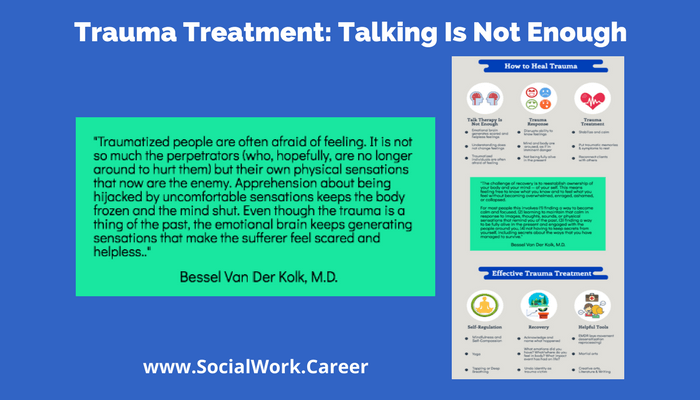
Would you like to know why talking therapy is insufficient for successful trauma treatment of your clients? Or improve your trauma treatment results with clients who have trauma histories? Dr. Bessel van der Kolk, a world-renowned expert on trauma, offers a six-hour presentation on this very topic. In this post, Amy Knitzer, LCSW, shares with you some […]
Solution Focused Therapy: Key Principles and Case Example
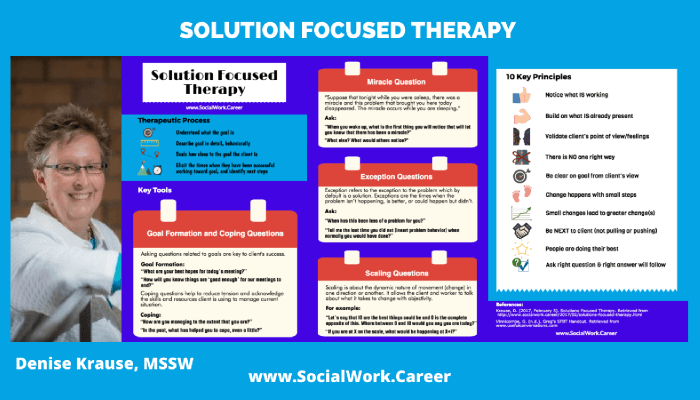
What is Solution Focused Therapy and how can it help your clients get unstuck? This comprehensive interview with Professor Denise J. Krause explores Solution Focused Therapy (SFT), an evidence-based practice equally effective as motivational interviewing. Learn the key Solution Focused Therapy techniques including the miracle question, scaling questions, exception questions, and goal formation. Discover how Solution Focused Therapy focuses on what IS working rather than problems, positioning clients as experts in their own lives. Includes a detailed case example applying Solution Focused Therapy to help a client struggling to find employment, plus the 10 essential principles every clinician should know. Solution Focused Therapy is particularly useful for “resistant” clients and can be applied in every modality, setting, and presenting problem.
The Minimalist Guide to Hookup Culture
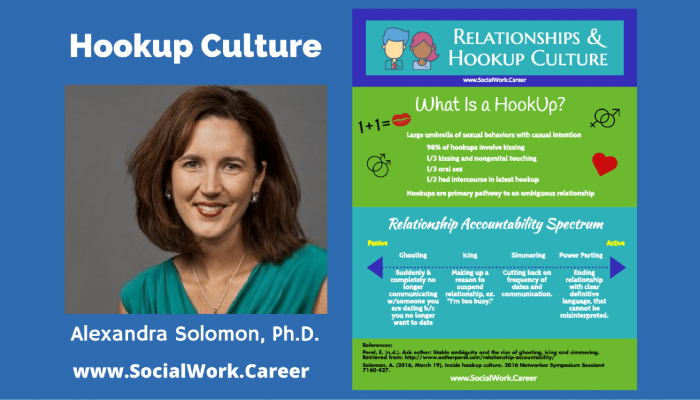
Confused by the term “hookup” when your younger clients use it? This guide provides mental health professionals with essential insights into hookup culture based on research from Alexandra Solomon, Ph.D. and Lisa Wade, Ph.D. Learn what hookups actually involve (hint: the term covers everything from kissing to intercourse), how common they are among college students (70% participate), and why most millennials are ambivalent about this culture despite it being the dominant pathway to relationships. Discover key terms like ghosting, icing, and power parting, understand how dating apps like Tinder and Bumble affect relationship formation, and gain practical guidance for connecting with millennial clients navigating this complex social landscape.
Real World Clinical Social Work: 7 Career Tips
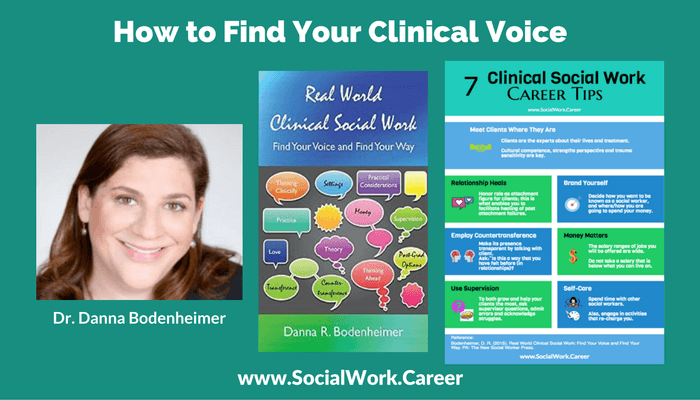
Essential clinical social work career tips from Dr. Danna Bodenheimer’s book “Real World Clinical Social Work: Find Your Voice and Find Your Way.” Dr. Bodenheimer, educator, psychotherapist, and head of Walnut Psychotherapy Center (trauma-informed outpatient setting specializing in LGBTQ treatment), wrote this book specifically to help new social workers feel more prepared as they leave graduate school and take on their first post-graduate position. The book’s five sections cover thinking clinically, getting your theoretical groove on, practical considerations, practice matters, and thinking ahead—nearly every clinical social work topic of concern before taking your first position including salary, setting choice, supervision use, key theories, case conceptualization, social work lens, and post-graduate options. Seven key takeaways include: (1) Meet clients where they are—they’re experts about their lives; cultural competence, strengths perspective, trauma sensitivity are key, (2) Relationship heals—honor your role as attachment figure, (3) Employ countertransference—make its presence known transparently for emotionally corrective experiences, (4) Use supervision—ask questions, admit mistakes, acknowledge struggles to grow, (5) Brand yourself—decide how you want to be known and where to spend continuing education money, (6) Money matters—don’t take salary below what you can live on; first job sets bar for subsequent salaries, (7) Self-care—spend time with other social workers, do low-cost recharging activities. Includes author interview discussing abundance/scarcity themes, financial freedom realities, geographic variations in career advancement, and agency culture challenges.
Dementia Care: Use Mind Mapping to Improve Quality of Life
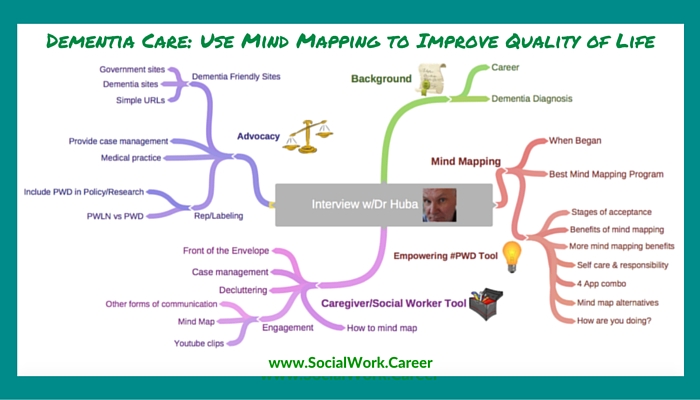
21 Dementia Tips for Caregivers and Social Workers Do you have a relative or clients who are wrestling with dementia, and would like to find a way to either help or better connect with them? Thanks to the generosity of Dr. George Huba, this post will provide you with 21 invaluable tips: 7 Ways to better cope with cognitive […]
