
Social work is built to respond to what’s happening right now, but what if the profession spent more time preparing for what’s coming next? That’s the work of a social work futurist: using tools from strategic foresight to scan for early signals of change, map out multiple possible futures, and help practitioners and agencies get […]
AI Tools for Therapists: 12 Questions with Kym Tolson, LCSW
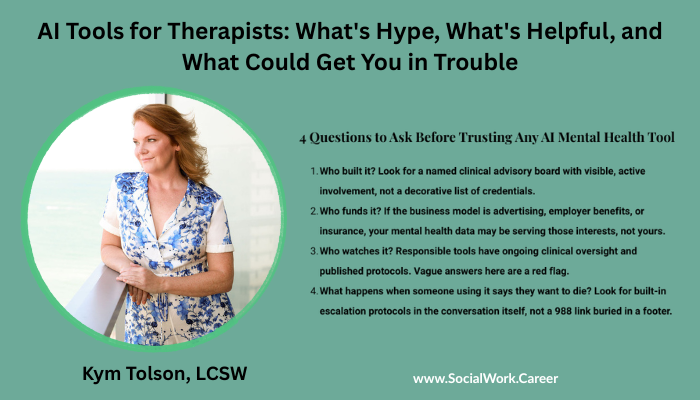
The conversation around AI tools for therapists has never been more urgent, or more complicated. In the span of just a few years, artificial intelligence has moved from a distant abstraction to a daily presence in clinical practice: drafting notes, generating treatment plan language, powering chatbots that millions of people are already using for emotional […]
Forensic Social Work: Where Human Need Meets Legal Consequence – An Interview with Tireeka Watson, LCSW
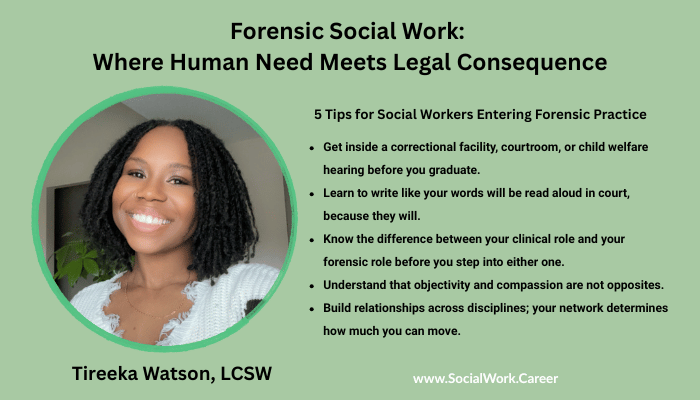
TL;DR Forensic social work is where clinical practice meets the legal system – courtrooms, corrections, child welfare, and reentry The forensic role is fundamentally different from the therapeutic one: the court is your primary client, not the individual Objectivity and compassion are not opposites; the best forensic practitioners bring both Trauma-informed practice matters even more […]
Workplace Violence Prevention for Social Workers
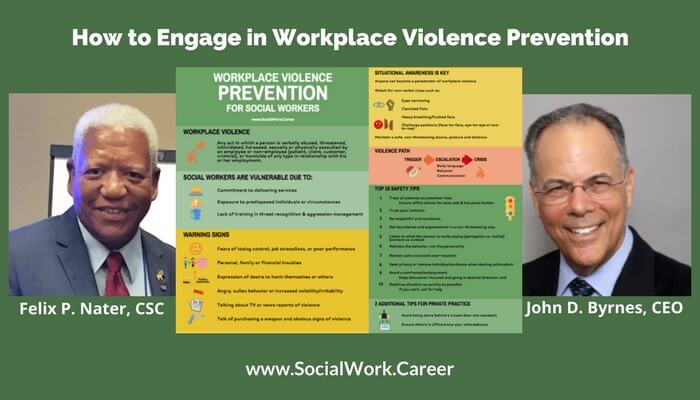
Workplace violence prevention is a topic of great interest to social workers and mental health clinicians. This is because health care workers are more likely than workers overall to be assaulted at work, as per the U.S. Government Accountability Office (GAO, 2016). The most common types of assaults are hitting, kicking and beating and the […]
HIPAA Compliance: Private Practice Security Tips
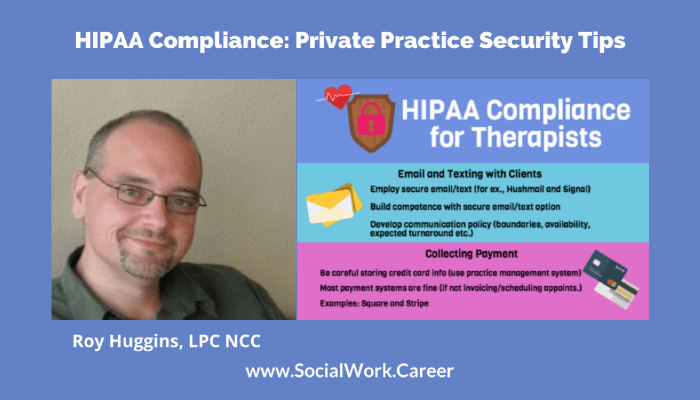
HIPAA compliance private practice guide: Roy Huggins explains HIPAA security for therapists including secure email/texting (Hushmail, Signal), payment processing (Square, Stripe), online therapy best practices, electronic record-keeping with encryption (FileVault 2, BitLocker), website requirements, and secure intake forms. Includes training recommendations and free resources.
