SUSTAIN YOUR PRACTICE
Self-Care & Resilience Hub
This self-care for social workers hub brings together evidence-based tools to prevent burnout, build resilience, and sustain a long, meaningful career
Self-Care Resources
Total Shares
Focus Areas
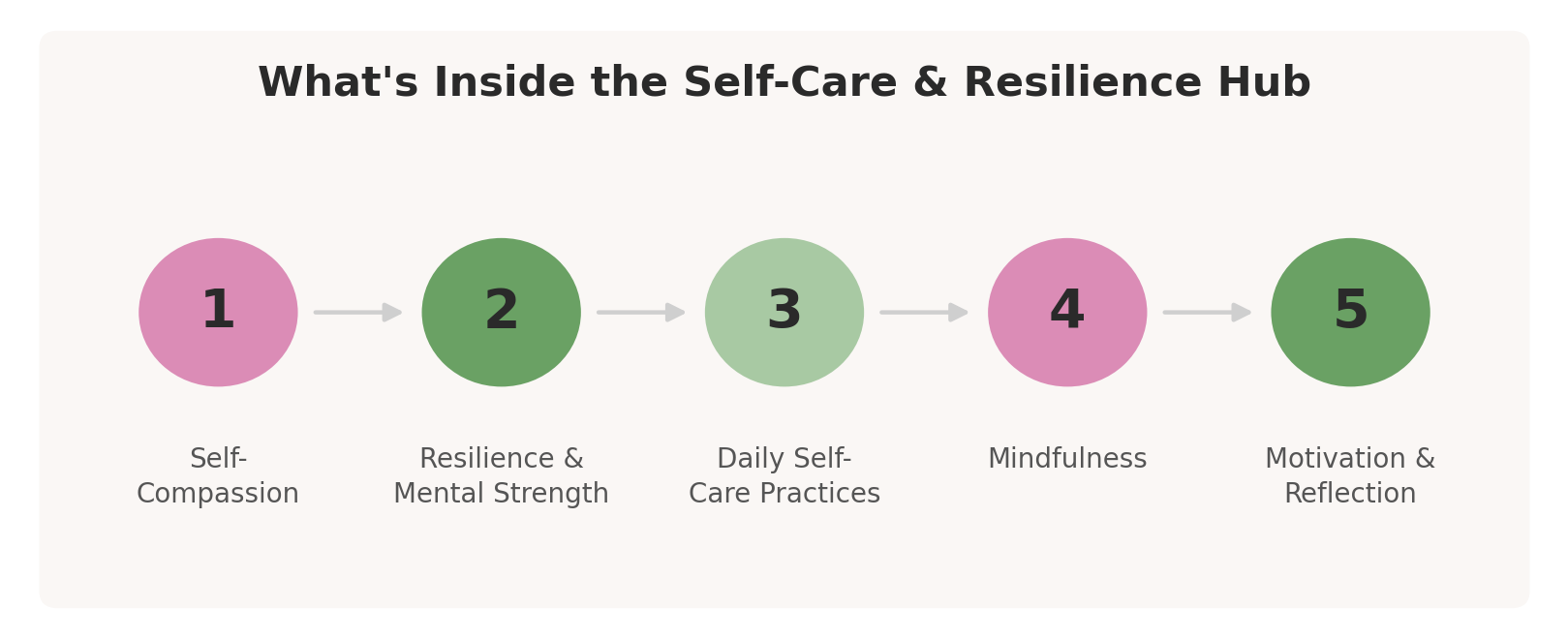
Self-care for social workers is not a weekend indulgence, it’s professional infrastructure. The World Health Organization now recognizes burnout as an occupational phenomenon, and social workers, regularly exposed to other people’s trauma and crisis, face elevated risk for it. The resources below draw on the same evidence base clinicians already use with clients: self-compassion research, neuroscience-backed resilience training, and daily practices that hold up under a full caseload.
Self-Compassion & the Inner Critic
Kristin Neff’s research on treating yourself with the same kindness you’d offer a good friend
Resilience & Mental Strength
Neuroscience-backed methods for regulating your thoughts, emotions, and behaviors under pressure
Daily Self-Care Practices
Concrete, low-lift ways to build self-care into an already-full schedule
Mindfulness & the Brain
How meditation practice reshapes the brain, and what that means for you and your clients
Motivation & Reflection
Tools for stepping back from the day-to-day to reconnect with what matters
Frequently Asked Questions
Why does self-care for social workers matter so much?
Social workers are regularly exposed to other people’s trauma and crisis, which puts them at elevated risk for burnout, compassion fatigue, and vicarious trauma. The A-to-Z Self-Care Handbook frames self-care as a professional necessity, not an indulgence: without it, your capacity to help clients well is compromised.
What’s the difference between self-compassion and self-esteem?
Self-esteem depends on comparing yourself favorably to others or succeeding; it drops during failure. Self-compassion, as researched by Kristin Neff, remains stable through failure because it’s based on treating yourself kindly, not on winning.
Can resilience actually be built, or is it something you’re born with?
It can be built. Linda Graham’s neuroscience research shows resilience develops through practices like mindfulness, social connection, exercise, self-compassion, and regularly stepping outside your comfort zone.
I don’t have time for self-care. Where should I start?
Start small rather than waiting for a free weekend. How to Practice Self-Care and the A-to-Z Self-Care Handbook both point to micro-practices, a few deep breaths between clients, a short walk, a boundary held, as the most sustainable place to begin.
Does mindfulness meditation actually change the brain?
Yes. As covered in 10 Take-Aways from a Neuroscience, Meditation & Health workshop, Dan Siegel’s research on neuroplasticity shows that regular mindfulness practice produces measurable structural changes in the brain linked to better emotional regulation and a stronger immune system.
How is mental strength different from mental health?
They’re not the same thing. As Amy Morin explains in How to Build Mental Strength, mental strength is the ability to regulate your thoughts, emotions, and behaviors, and it can be built regardless of your current mental health state.

