
Private practice success strategies from Lynn Grodzki, LCSW, MCC, based on her talk “Navigating the New Psychotherapy Marketplace” at the 2014 Psychotherapy Networker Symposium. Learn how to succeed in today’s competitive mental health marketplace where therapists face lower insurance reimbursements (mental health outlays reduced from 15% to 1% since 2000), fewer sessions per client, preference for medication over talk therapy despite evidence showing talk therapy equals or supersedes medication long-term, and utilitarian perceptions of therapy. Grodzki recommends adapting business strategies that work with educated consumer shoppers. Key areas covered: Marketing is critical (unique selling proposition, benefits vs features, preparation for negotiation), communicate persuasively (prepare for first contact without disadvantaging yourself, structure 15-30 minute consultations to give prospective clients experience of boundaries and your therapeutic style), and adapt working style (review results every session tracking goals and progress, set expectations using metaphors, partner with clients session-by-session). Includes detailed infographic summarizing main takeaways and guidance on fee negotiation, handling objections like “I need someone who takes my insurance,” and creating successful first contacts.
Re-Energize and Provide Best Therapy

Manage Your Energy for Optimal Ethical Therapy Is there a connection between ethics, performance and self-care? Absolutely! According to Mary Jo Barrett, MSW, there is not only a link between these elements but she argues that it is not ethical for a social worker (or other mental health provider) to not be emotionally or physically […]
4 First Session Strategies Every Therapist Should Know
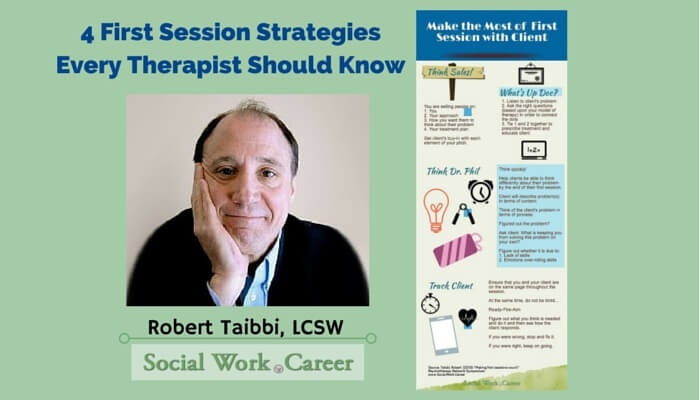
Most clients drop out after one session. Learn 4 first therapy session strategies from Robert Taibbi, LCSW: understand issues quickly, help clients feel differently before leaving your office. Key first session with client approaches include taking charge, thinking like a detective, not being timid, and fixing mistakes immediately. Improve client retention with these solution-oriented techniques.
