• About
    • About Blog
    • Dorlee Michaeli, MBA, LCSW
    • Privacy Policy
    • Disclaimer
  • Praise
    • Testimonials from Clients and Supervisors
    • What Readers Say
  • Blog
    • Social Work Career
    • Clinical Practice
    • LMSW Exam
    • Professional Development
    • Personal Growth
    • Blog Index
  • Contact

SocialWork.Career

Social Work Career Development Resources and More

  • Social Work Career
    • Job Seeking
    • Career Guidance
    • Grad School
  • Clinical Practice
    • Clinical Skills
    • Macro Practice
  • LMSW Exam Guide
  • Professional Development
    • Expert Interviews
    • Book Reviews
  • Free Mental Health Webinars
  • Personal Growth
    • Motivational
    • Self Care
    • Therapy

Therapy Notes: How to Document Gray Areas

By Maelisa Hall

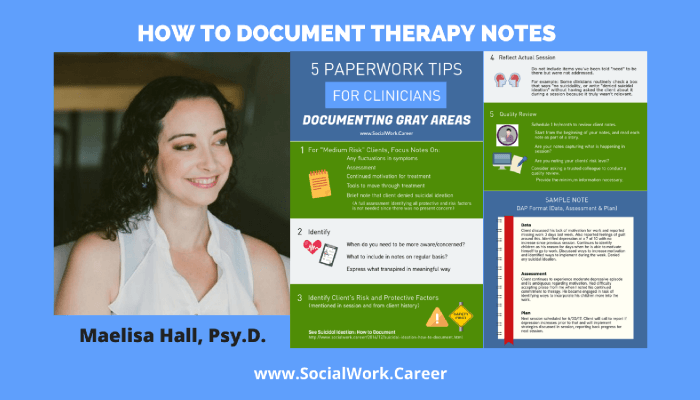
Therapy Notes Documentation with Maelisa Hall, PhD

Not every therapy client is high-risk or worry-free—most fall somewhere in between. These “medium risk” situations include ongoing depression, self-harm behaviors without suicidal intent, impulsivity, and substance use. They require consistent assessment but don’t typically warrant hospitalization. The challenge? Knowing what to document and how often. This guide provides five practical tips from clinical documentation expert Maelisa Hall for managing therapy notes with medium risk clients. You’ll learn how to identify what’s truly relevant to document (without writing excessive notes), see a real DAP note example for a client with moderate depression, and discover why reviewing your documentation monthly can transform your practice. Whether you’re a new clinician or experienced therapist, these strategies help you create meaningful, legally sound therapy notes without burning out on paperwork

Filed Under: Clinical Practice, Expert Interviews, Therapeutic Skills Tagged With: documentation, Maelisa Hall Psy.D., suicidal ideation, suicide, suicide prevention, therapy notes

Suicidal Ideation: How to Document

By Maelisa Hall

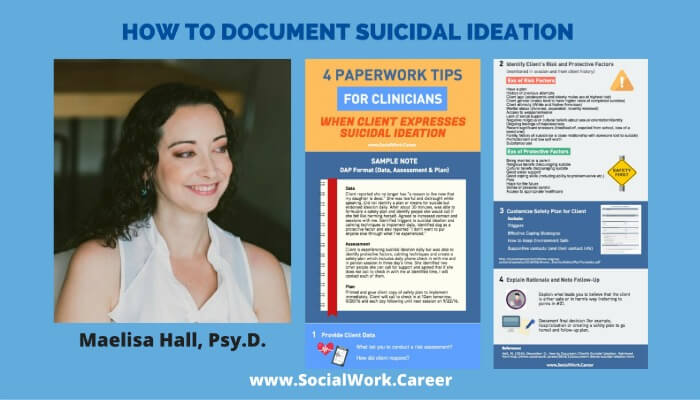
4 suicidal ideation notetaking tips

When a client expresses suicidal ideation, documentation becomes crucial but also anxiety-inducing for many clinicians. Learn the four key components of effective suicide risk assessment documentation: providing clear client data with exact quotes, identifying risk and protective factors, creating safety plans (not contracts), and explaining your clinical rationale. This guide includes a sample progress note using the DAP format and best practices for follow-up documentation. Whether you’re a new clinician or experienced practitioner, these principles will help you create ethically sound documentation that protects both you and your clients while improving clinical practice.

Filed Under: Clinical Practice, Expert Interviews, Featured Expert Interviews, Therapeutic Skills Tagged With: documentation, Maelisa Hall Psy.D., suicidal ideation, suicide, suicide prevention, therapy notes

Subscribe


Dorlee Michaeli, MBA, LCSW

Featured

Interviewed

inSocialWork

Let’s Also Connect

Recent Posts

  • Imposter Syndrome in Social Work: Why It Shows Up & What Helps
  • Free Mental Health Webinars, December 2025
  • #StandWithAAPI: Anti-Asian Racism Resources for Social Workers and Therapists
  • Best in Mental Health for Sept and Oct 2020
  • Best in Mental Health for August 2020

Copyright

All material on this website is copyrighted by Social Work Career. All rights reserved. Please contact the editor for permission to reproduce or reprint any materials on this site.

Recent Comments

  • Dorlee on Imposter Syndrome in Social Work: Why It Shows Up & What Helps
  • Cheryl Edwards on Imposter Syndrome in Social Work: Why It Shows Up & What Helps
  • Dorlee on Imposter Syndrome in Social Work: Why It Shows Up & What Helps
  • Jonathan Singer on Imposter Syndrome in Social Work: Why It Shows Up & What Helps
  • Dorlee on Imposter Syndrome in Social Work: Why It Shows Up & What Helps

National Hotline

Social Work Career does not provide crisis or counseling services. If you need to talk or are concerned about someone else, please call 988. If someone is in immediate crisis, dial 911.

Search

Archives

Categories

Social Work Career · Copyright © 2026 · WordPress · Log in