Have you been out of the job market for awhile? Are you wondering what are the necessary steps to take in order to get your career back on track? As some of you may know, there was a period of time after I completed my studies for my Master’s in Social Work that I was unable to take […]
How to Use Two Acronyms to “Go for the Gold” on the LMSW Exam!
Would you like to know how to apply The Two Acronyms You Must Know for the LMSW Exam? The purpose of this post is to answer this very question and to provide a few additional helpful resources 🙂 Below you will find six sample LMSW exam questions as well as their respective answers. Each one […]
Terminal Illness and the Race Against Time

As some of you may remember from What Do You Do When a Loved One Has Cancer?, someone very near and dear to me is engaged in a difficult battle with cancer. I have the opportunity to see him now and am full of mixed emotions. On the one hand, I am so excited to see […]
NASW Contest for Social Workers
As you may know, the National Association of Social Workers (NASW) is putting together a wonderful conference Restoring Hope: The Power of Social Work in Washington, D.C.. Unfortunately, if you haven’t already reserved your spot, you will not be able to attend because the conference is already sold out 🙁 Key workshops include: Leadership and […]
An Online Community for Social Workers

Socialworkhelper is an online magazine with over 85K fans (as of 2015) ! How did it all begin? As Deona Hooper, MSW, founder of the publication/community, explains that it “was born from pain. This time period was one of the most difficult times in my life. I had no health insurance, and had to access the free clinic […]
Key Take-Aways from NASW’s Trauma & Addictions Workshop
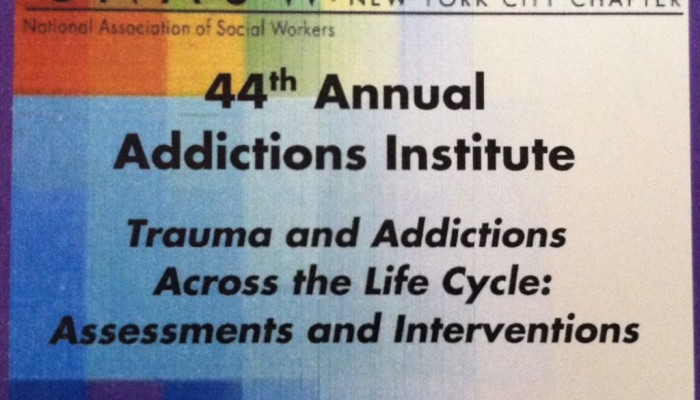
The New York City Chapter of the National Association of Social Workers (NASW) provided a wonderful program with 34 different seminars about Trauma and Addictions Across the Life Cycle. The key take-aways from my day were as follows: I. An Overview of Trauma and Addictions Through the Life Cycle Prevalence of Post Traumatic Stress Disorder […]
Dialectical Behavior Therapy – A Mindfulness-Based Behavioral Therapy
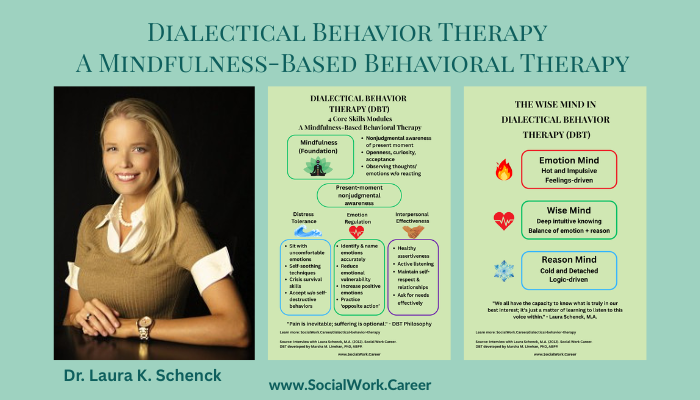
Comprehensive interview on dialectical behavior therapy (DBT) with Laura Schenck, M.A., Ph.D. student and psychotherapist specializing in mindfulness-based behavioral therapies. Learn what dialectical behavior therapy is, how it differs from traditional CBT, and why it’s particularly effective for borderline personality disorder (BPD) and emotion regulation challenges. Discover DBT’s foundation in mindfulness—directing nonjudgmental, open, accepting, and curious attention to the present moment. Understand the four core DBT skills modules: mindfulness (present-moment awareness), distress tolerance (sitting with uncomfortable emotions without self-destructive behaviors), emotion regulation (identifying and managing emotional states), and interpersonal effectiveness (communicating and relating to others effectively). Explore the “wise mind” concept—accessing deep intuitive knowing that balances emotion mind and reason mind. Laura explains how DBT teaches that “in order to move through painful experiences, we must be willing to identify them, accept their presence, refrain from judgment, and ultimately release them.” Includes guidance on DBT training resources and applications for clients beyond BPD diagnosis.
Facing Repression
What Is Repression? Repression is one strong defense, With it, you have a total lack of recall, No thoughts, feelings or memories, Of the painful event(s). In the conscious memory, that is. How can that be, you ask? People have different things to bury: Abandonment or neglect, Physical abuse, Sexual abuse, Other issues, Or some […]
How Does a Person Know Her True Self?

Who Are You? How does a person emerge? Become who she is, Know what she likes, Or what she wants? It may seem obvious… A little baby is born, Everyone is celebrating, The little baby is showered with love, Her milestones are noted with glee, Lower order needs of Maslow’s hierarchy are all met, Baby […]
Exploring Alice Miller’s “The Drama of the Gifted Child”
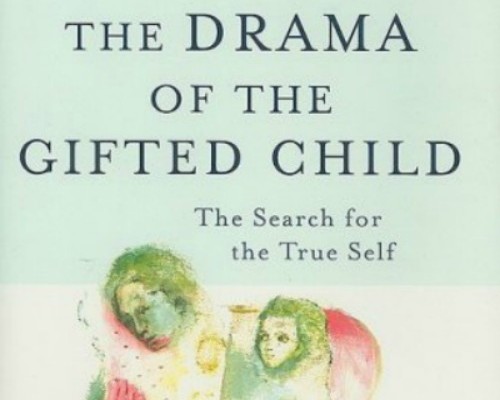
Have you read the book The Drama of the Gifted Child: The Search for the True Self by Alice Miller? If not, I highly recommend it. Alice Miller has much wisdom and knowledge to share with you – whether you are a mental health professional or a lay person trying to get a better understanding of […]
